
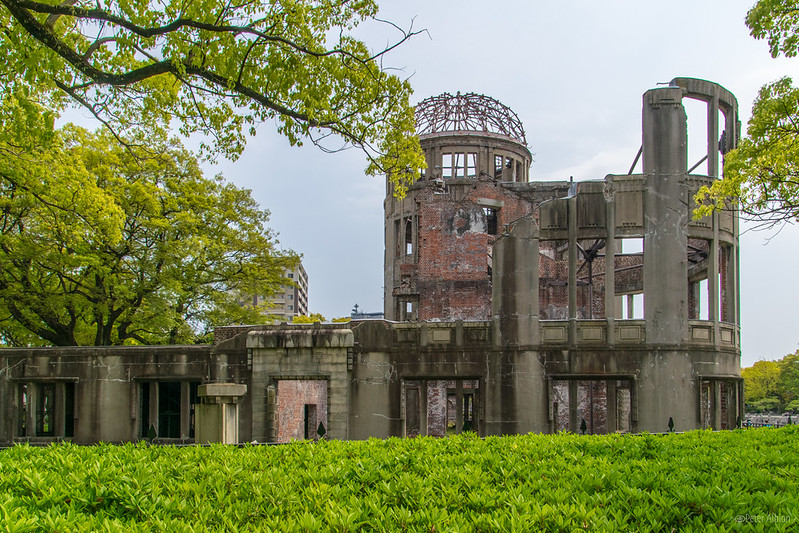
The condemnation of indiscriminately destructive wars was made explicit in Vatican II’s Pastoral Constitution on the Church in the Modern World, Gaudium et Spes. Pope St John XXIII in Pacem inTerris and Pope Francis in Fratelli Tutti wrote against using war as a solution to violation. Francis wrote “It is very difficult nowadays to invoke the rational criteria elaborated in earlier centuries to speak of the possibility of a ‘just war’. Never again war!”
The Church’s “rational criteria” in its just war doctrine requires the following to be present: damage inflicted by the aggressor must be lasting, grave and certain; all other means of addressing the problem must have been shown to be impracticable or ineffective; there must be serious prospects of success; and, finally, the use of arms must not produce evils and disorders greater than the evil to be eliminated. The war must have a just cause (jus ad bellum) and the war must be prosecuted justly (jus in bello).
Australia’s defence policy is based on achieving homeland security – the defence of the waters around Australia and the prevention and repulsion of invasion. It is not primarily directed towards fighting external wars. Nonetheless, in recent times, Australia has been involved in three wars in foreign lands, and these wars are now usually accepted as unjust. In none of the cases was Australia’s homeland security endangered.
Our involvement in the civil war in Vietnam lacked justification (‘jus ad bellum’), being based on lies about the “Gulf of Tonkin” episode, and included unjust, immoral tactics such as the use of Agent Orange and the targeted slaughter of civilians (absence of jus in bello).
Our involvement in the Second Iraq War was based on the United States’ lies about Iraq’s possession of “weapons of mass destruction”, and the unlikely claim that secular Iraq was sheltering the Islamic terrorist organisation Al Qaeda. Once again, there was no jus ad bellum. Likewise, jus in bello, was lacking, with the invaders well documented to have used immoral torture of Iraqi prisoners in Abu Ghraib prison. The Catholic bishops of Australia and the USA bishops both issued statements opposing the war.
The third recent unjust war waged by Australia was the invasion of Afghanistan, justified by US President GW Bush as a “crusade” to recapture Osama bin Laden. Once again, prisoners were tortured, and Australians have been accused of war crimes.
Australia’s new defence partnership, AUKUS, was presented as a fait accompli by the then Prime Minister Scott Morrison in 2021, partially in an effort to “wedge” the Opposition in the 2022 Federal election. It involves a controversial purchase from the USA of nuclear-powered attack submarines. These are not considered ideal for defending Australian offshore waters against attack, or maintaining trade seaways, for which a larger number of smaller non-nuclear submarines is preferable. Both India and Japan have recently ordered fleets of such conventional submarines to defend their borders
The only feasible role for the AUKUS submarines is helping the USA and Taiwan attack Chinese forces in a war against any forceful attempt by the Peoples Republic of China to reincorporate into China the Chinese Province of Taiwan. Military experts believe there is no likelihood of China initiating a war against Australia, but China would retaliate against Australia if it became a party to such a war of aggression against China.
In 2021, the Vatican Secretary of State, Cardinal Parolin, expressed concern over the AUKUS agreement.
What is the legality of the status quo in Taiwan? Taiwan was first colonised by China in the early seventeenth century and has been a province of China since 1887. It was lost to Japan in the Sino-Japanese war of 1894-95, but returned to the government of the Republic of China after World War II by the United Nations, rather than regarding it as a former Japanese colonised territory, subject to the right of self-determination. Most states, including Australia and the USA, accept this one state situation.
However, Taiwan was occupied in 1949 by the defeated, non-communist Guomindang (Kuomintang) forces, who retreated there from the mainland after losing the Chinese Civil War against the Communists of the Peoples Republic of China (PRC). A former Australian judge of the International Court of Justice, the late James Crawford, described Taiwan as Chinese territory, with governance disputed.
The legality of a war by the USA (and Australia) against the PRC over Taiwan has been investigated by Ben Saul, Challis Professor of International Law at the University of Sydney. He stated that Taiwan has never been admitted to the United Nations as a sovereign State, and Taiwan itself has never categorically declared statehood. The fact that the PRC has never actually governed Taiwan is irrelevant to its sovereignty. Both governments agree that there is only “one China”. In a civil war, dissident forces may hold territory, but do not have actual sovereignty over that territory. Governments normally have the right to suppress rebellion in their territory.
Sinophobia, with a criticism of Australia’s defence effort against China, has been used as a tactic in Australian elections, exemplified by a scare over a Chinese flotilla circumnavigating Australia in international waters, which was said to be threatening. The loyalty of Australian citizens of Chinese heritage has been questioned. However, Australia maintains a naval and air force presence in the seas around China.
The Catholic Church in Australia is being placed in a difficult position. On the one hand, the Vatican has unequivocally demanded an end to wars, but, on the other hand, internal Australian politics on both sides is edging the population to accept the likelihood of yet another unjust war, this time with China. What can the Church do to defuse the situation, and perhaps divert some of the massive expenditure on war preparations to ameliorate some of the immense domestic problems that engulf Australian society today? I believe that the Australian Bishops should endorse Cardinal Parolin’s concern regarding AUKUS, and echo Pope Francis’ call in Fratelli Tutti: “Never again war!”
Leave a Reply
You must be logged in to post a comment.